Essential Items to Carry on the Trail
Proper preparation can make the difference between a minor inconvenience and a dangerous situation when you're miles from help on a remote trail. This comprehensive checklist covers the essential items every off-roader should carry.
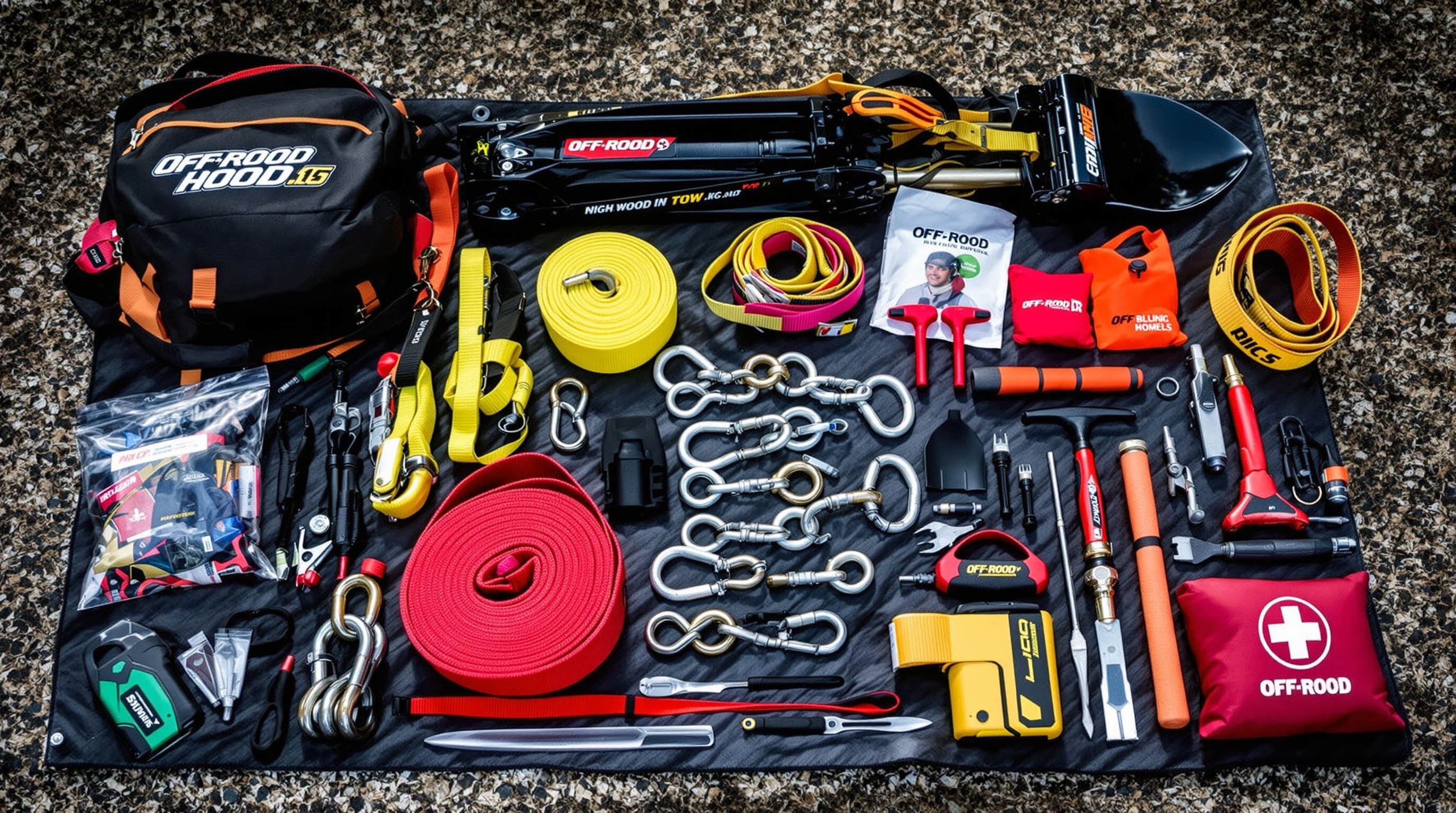
Recovery Equipment
Getting stuck is part of off-roading. Having the right recovery gear means you can get yourself or your buddies unstuck quickly and safely.
Must-Have Recovery Items:
- Tow Straps - At least two rated straps, 20-30 feet long, with 20,000+ lb capacity. Never use chains for kinetic recovery.
- D-Ring Shackles - Multiple heavy-duty shackles rated for your vehicle weight. Cheap shackles can fail catastrophically.
- Snatch Block - Allows you to change winch pull direction and double pulling power.
- Winch - If equipped, ensure you have proper accessories: gloves, tree saver strap, dampener.
- High-Lift Jack - Versatile tool for lifting, winching, and spreading. Learn proper use before needing it.
- Shovel - Full-size shovel for digging out stuck tires or creating recovery points.
- Traction Mats - Maxtrax or similar boards provide traction in mud, sand, or snow.
- Work Gloves - Heavy leather gloves protect hands when handling recovery straps and winch cables.
Tools and Spare Parts
Trails break things. Carrying basic tools and common failure-prone parts can get you back to civilization instead of walking out.
Essential Tools:
- Socket set (metric and standard if needed for your Jeep)
- Wrenches - combination and adjustable
- Screwdrivers - Phillips and flathead, multiple sizes
- Pliers - regular, needle-nose, and vice grips
- Hammer or dead-blow mallet
- Tire repair kit with plugs and CO2 inflator
- Air compressor - essential for airing back up after trails
- Tire pressure gauge
- Duct tape and zip ties - fix almost anything temporarily
- Baling wire or mechanic's wire
- Multi-tool or Leatherman
- Flashlight or headlamp with extra batteries
Spare Parts to Consider:
- Full-size spare tire (aired up and in good condition)
- Spare belts for alternator and accessories
- Radiator hoses and clamps
- Fuses and electrical connectors
- Spare fluids: engine oil, transmission fluid, brake fluid, coolant
- U-joint or CV joint if you've had previous failures
- Bulbs for headlights and taillights
Safety and First Aid
Accidents happen, especially in remote areas. A comprehensive first aid kit and safety equipment are non-negotiable.
First Aid Kit Contents:
- Bandages and gauze pads in various sizes
- Medical tape and butterfly closures
- Antiseptic wipes and antibiotic ointment
- Pain relievers (ibuprofen, acetaminophen)
- Antihistamine for allergic reactions
- Tweezers and scissors
- Elastic bandage wraps for sprains
- Instant cold packs
- Emergency blanket
- Personal medications you require
According to the American Red Cross, wilderness first aid training is highly recommended for anyone spending significant time in remote areas. A two-day course can teach you skills that could save a life.
Safety Equipment:
- Fire extinguisher (ABC rated, mounted securely)
- Warning triangles or flares
- Whistle for signaling
- Mirror for signaling aircraft (in extreme emergencies)
- Matches or lighter in waterproof container
- Extra clothing layers (weather can change quickly in mountains)
Navigation and Communication
Don't rely solely on your smartphone for navigation in the backcountry. Cell service is often nonexistent on remote trails.
Navigation Essentials:
- GPS device with topo maps or trail GPS tracks
- Paper maps of the area
- Compass (and knowledge of how to use it)
- Trail map downloaded to your phone (works offline)
Communication Options:
- CB radio or HAM radio for vehicle-to-vehicle communication
- Satellite messenger (InReach, SPOT) for emergency SOS
- Fully charged cell phone in waterproof case
- Portable battery pack or solar charger
Food and Water
Always carry more food and water than you think you'll need. A day trip can become an overnight situation if you break down or get stuck.
- Water - at least 1 gallon per person, plus extra for radiator
- Water purification tablets or filter
- Energy bars, trail mix, or MREs
- Electrolyte drinks or powder
- Meals for overnight if planning multi-day trip
Nutrition Strategy for Trail Days
Proper nutrition on the trail isn't just about preventing hunger - it's about maintaining energy and decision-making capability throughout a long day. Many wheelers focus extensively on vehicle preparation while treating food and hydration as afterthoughts, then wonder why they're exhausted and making poor decisions by late afternoon.
Hydration at Elevation: At 7,000+ feet where most Northern California trails operate, your body loses water faster through respiration and increased urination. Dehydration sneaks up on you - by the time you feel thirsty, you're already behind. Plan to drink 3-4 liters per person per day in summer conditions, more if you're doing physical work like recovery operations.
Energy Management: A full day on technical trails demands sustained energy. Starting with a good breakfast, then maintaining blood sugar throughout the day with regular snacking prevents the energy crashes that lead to poor decisions. Pack foods that provide quick energy (fruit, energy bars) plus sustained energy (nuts, jerky, cheese). Avoid heavy meals mid-day that make you sluggish.
Electrolyte Replacement: You're not just losing water through sweat - you're losing sodium, potassium, and magnesium. Simple water won't replace these minerals. Electrolyte drinks, salt tablets, or even salted nuts help maintain the mineral balance your muscles and nerves need to function properly. This becomes especially important if you're doing physical recovery work in hot conditions.
High-Altitude Considerations: Altitude affects digestion and appetite. Foods that sit well at sea level might cause stomach upset at 8,000 feet. Many experienced wheelers find they tolerate simple carbohydrates and easily digestible proteins better than heavy, fatty foods when operating at elevation. Pack foods you know agree with you rather than experimenting on important trips.
Smart Food Choices for Trail Days
- Quick Energy: Fresh fruit, energy gels, honey packets, dried fruit
- Sustained Energy: Mixed nuts, beef jerky, cheese, whole grain bars
- Lunch Options: Sandwiches with lean protein, wraps, pre-made salads in coolers
- Emergency Backup: MREs or freeze-dried meals (lightweight, won't spoil)
- Electrolytes: Sports drinks, electrolyte tablets, or coconut water
- Avoid: Salty snacks that increase dehydration, heavy fatty meals, alcohol
Don't underestimate how much proper nutrition and hydration impact your performance and safety on challenging trails. The difference between a successful run and a disaster often comes down to maintaining energy and mental sharpness throughout the day.
Seasonal Considerations
Summer Trails: Extra water, sun protection, insect repellent, sunscreen, hat
Winter/Snow: Tire chains, sleeping bag, extra warm clothing, hand warmers, sand or kitty litter for traction
Organization and Storage
All this equipment is useless if you can't find it when needed. Organize your gear logically:
- Keep recovery gear in accessible location
- Store tools in organized toolbox or roll
- Mount fire extinguisher where it can be reached quickly
- Keep first aid kit in consistent, known location
- Use action packers or dry bags to protect gear from water and dust
Before Every Trail
Don't just throw gear in your vehicle and hope for the best. Before each trip:
- Verify all recovery straps are in good condition (no fraying)
- Check tire pressure in spare
- Ensure air compressor works
- Test flashlights and replace batteries
- Refill any fluids used since last trip
- Check first aid kit and replace used items
- Charge all electronic devices and batteries
Preparation isn't just about having the right gear - it's about maintaining that gear and knowing how to use it. An expensive winch is worthless if you don't know proper rigging techniques. Take time to practice recovery techniques in a safe environment before you need them on a remote trail.
For more information on using recovery equipment safely, check out our trail driving tips section.